


Electrify part of your steam production with an electrode boiler alongside existing gas-fired boilers.
Companies that use steam in production can electrify part of their steam supply without replacing the entire boiler plant. One option is to add an electrode boiler alongside the existing gas-fired boilers.
This allows the company to produce steam using electricity while continuing to use its installed boilers. The boilers and their controls must work together to deliver the steam required by production.
How do electric and gas-fired boilers work together?
In this arrangement, a separate electrode boiler and one or more fuel-fired boilers supply steam to the same system.
The electrode boiler generates heat directly in the water through electrical resistance. It uses electricity to produce steam, while the gas-fired boiler uses combustion.
The amount of steam each boiler supplies depends on the plant’s operating conditions. Available electrical capacity limits the electrode boiler’s output. Together, the boilers must deliver the required steam flow at the specified operating pressure.
The controls must coordinate boiler output as steam demand changes. The electrode boiler therefore needs to be integrated with the existing plant and its control system.
Electrification without replacing the entire boiler plant
Adding an electrode boiler makes it possible to electrify part of steam production while keeping existing boilers in operation.
The gas-fired boiler can continue to supply some of the steam or provide backup, provided the system is designed and sized for that purpose. The electrode boiler does not necessarily need to meet the company’s peak steam demand on its own.
This can suit companies planning to electrify in stages. The electrode boiler can be sized to match the available electrical supply and the amount of steam the existing boilers will continue to provide.
However, an existing gas-fired boiler does not automatically provide sufficient backup. This depends on its capacity, condition and the time it needs to take over steam production.
What does combined operation mean for costs and performance?
With both electricity and gas available, a company has more options for producing steam. The benefits depend on the plant and its operating conditions.
Electricity and gas prices, grid charges and operating hours all affect how production can best be shared between the boilers. On-site electricity generation may also be relevant if power is available when steam is needed.
Electrification does not automatically reduce costs. The assessment must also account for investment, connection costs and expected use of the electrode boiler. Production requirements for steam flow and pressure will determine how much operation can be adjusted in response to changing energy prices.
An electrode boiler produces steam without combustion, so there are no local combustion-related CO₂ or NOx emissions from the boiler itself. The overall carbon footprint depends partly on the electricity used and how much fuel-fired steam production it replaces.
PARAT IEH alongside existing steam boilers
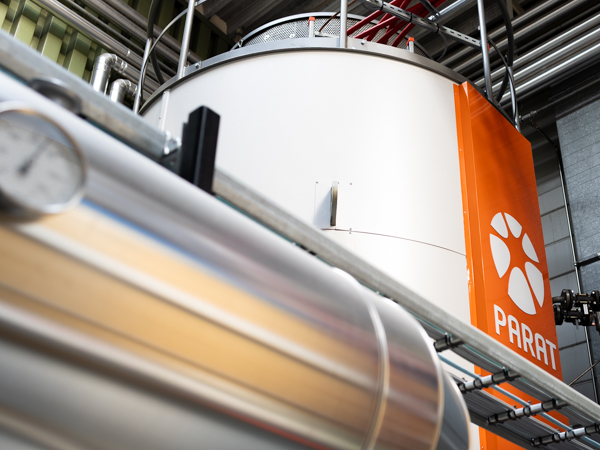
At AS SCAN, we supply PARAT IEH boilers for industrial steam production and provide service and maintenance for the boilers we sell. Depending on the plant’s design, PARAT IEH can supply process steam, supplement existing boilers or provide backup.
The boiler automatically adjusts its output in response to steam pressure. Water conductivity is monitored continuously because it affects boiler output.
When operating alongside other boilers, the controls must be coordinated so that total steam production follows the company’s demand.
Learn more about our PARAT electrode boiler for industrial steam production, or contact us if you are considering adding an electrode boiler to your existing steam plant.